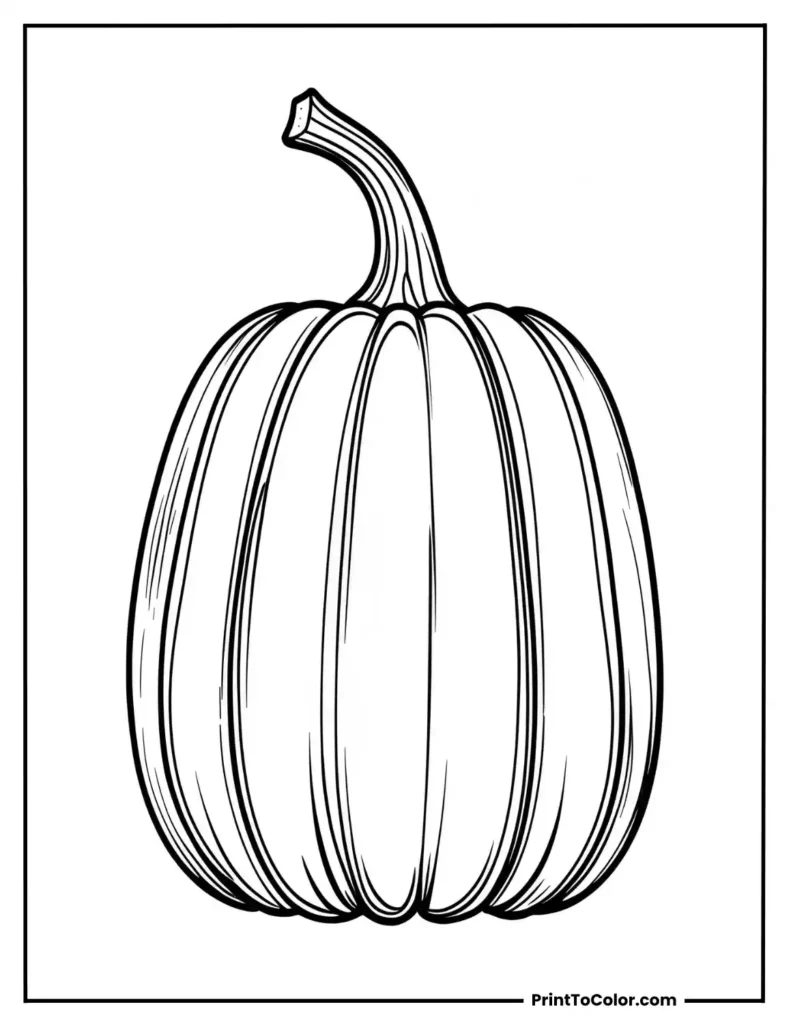
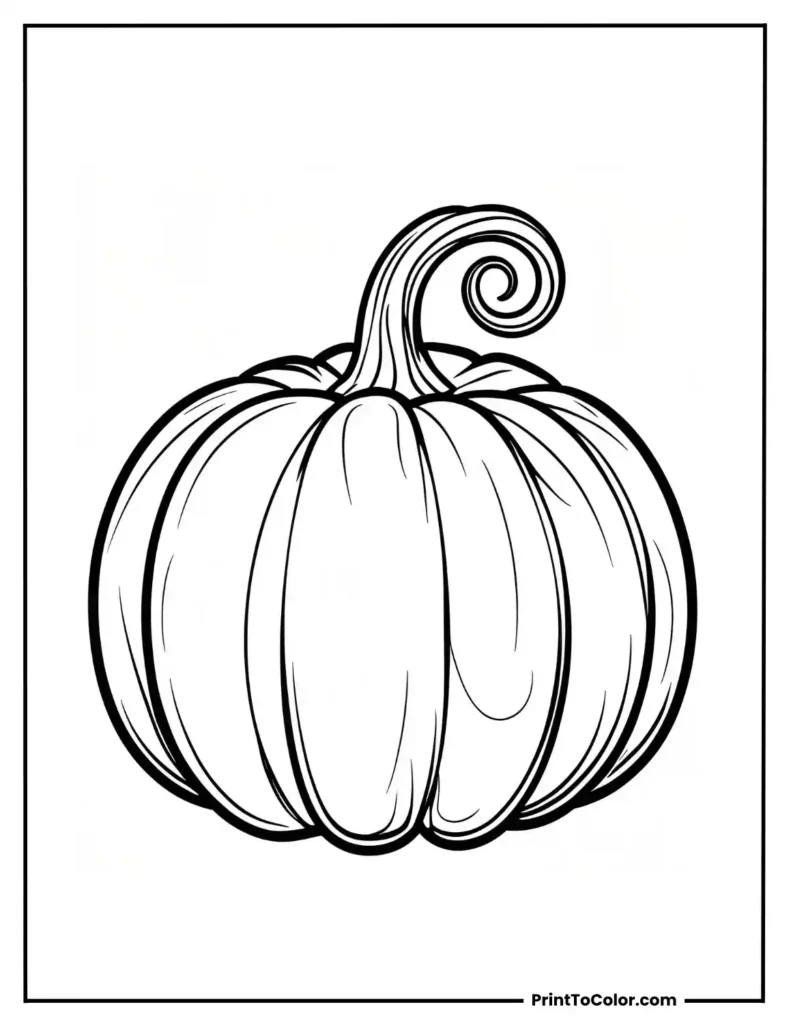
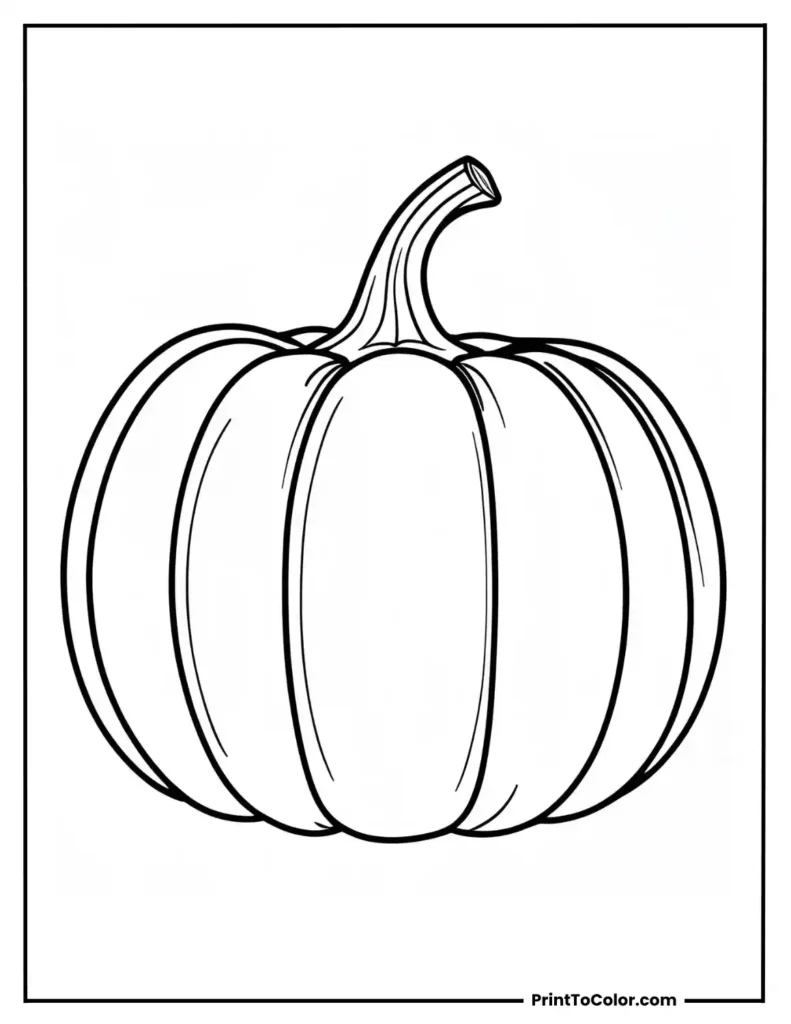
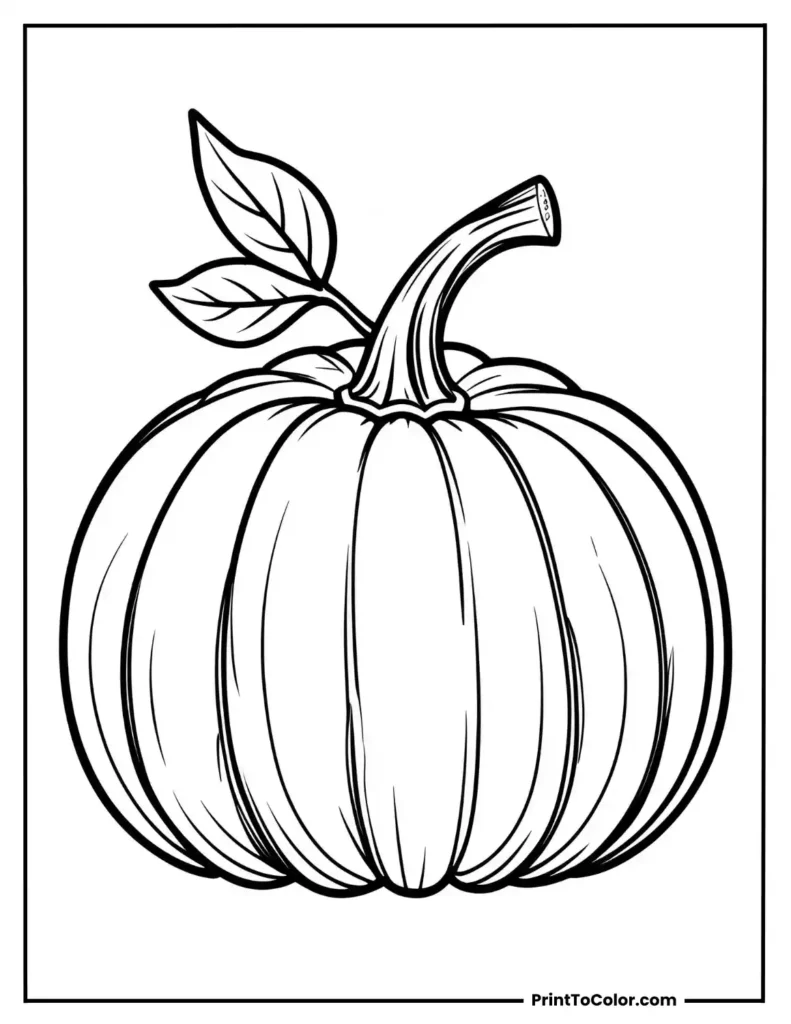
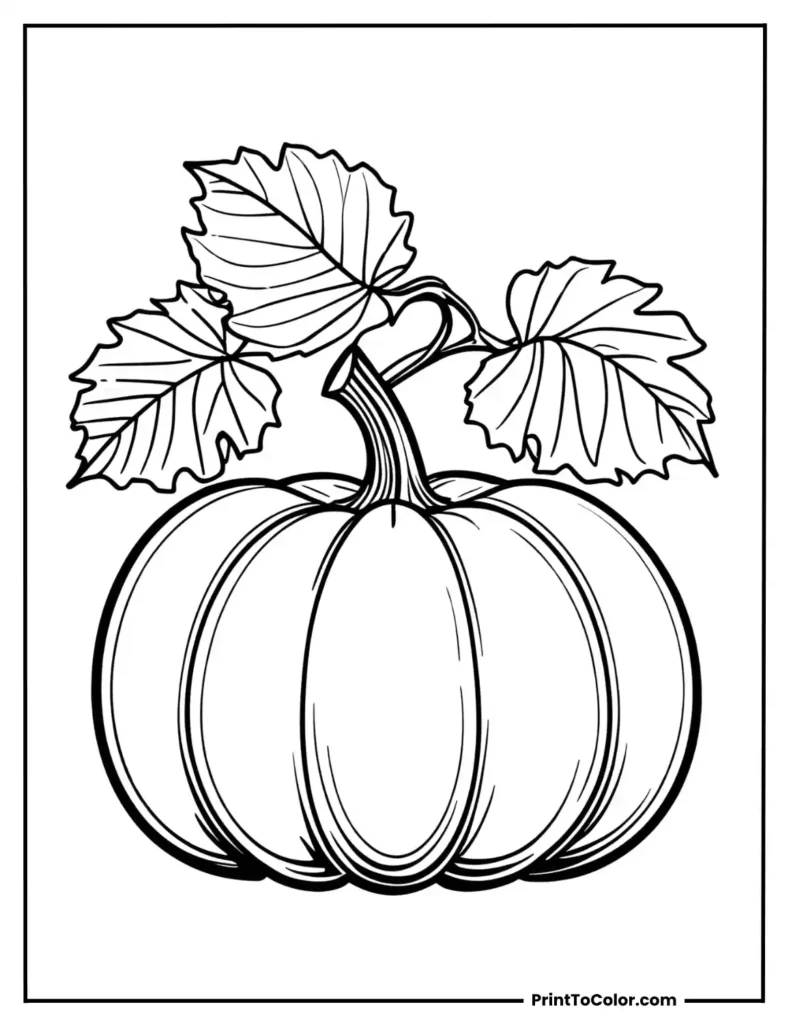
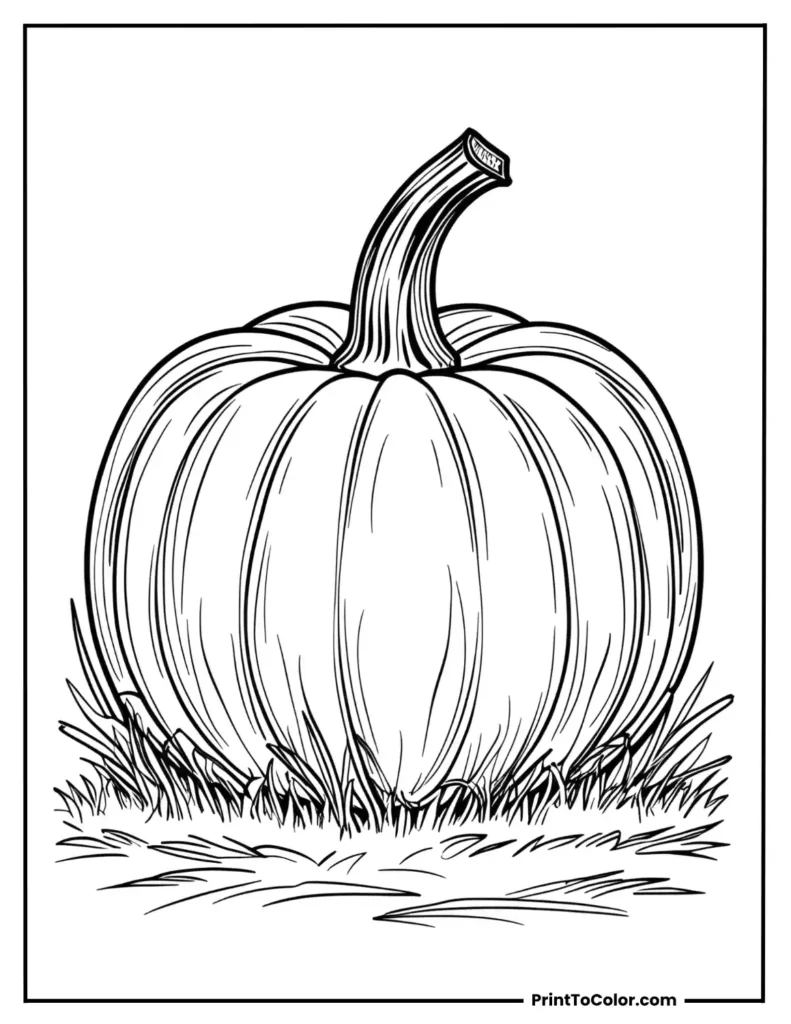
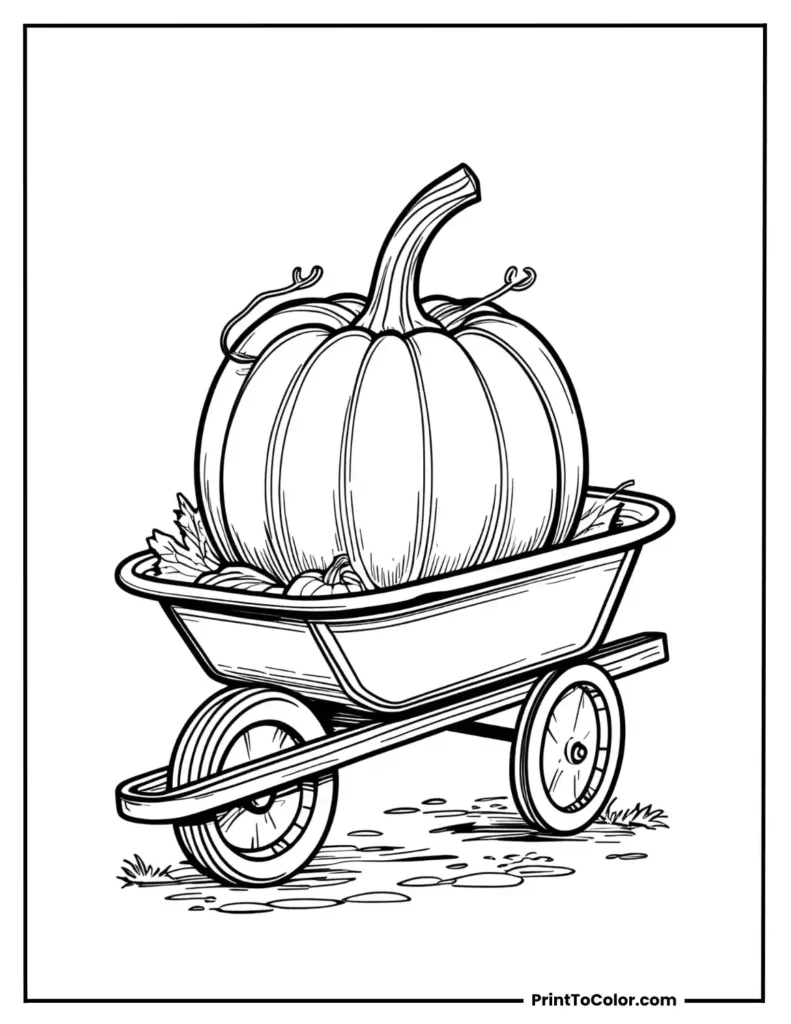
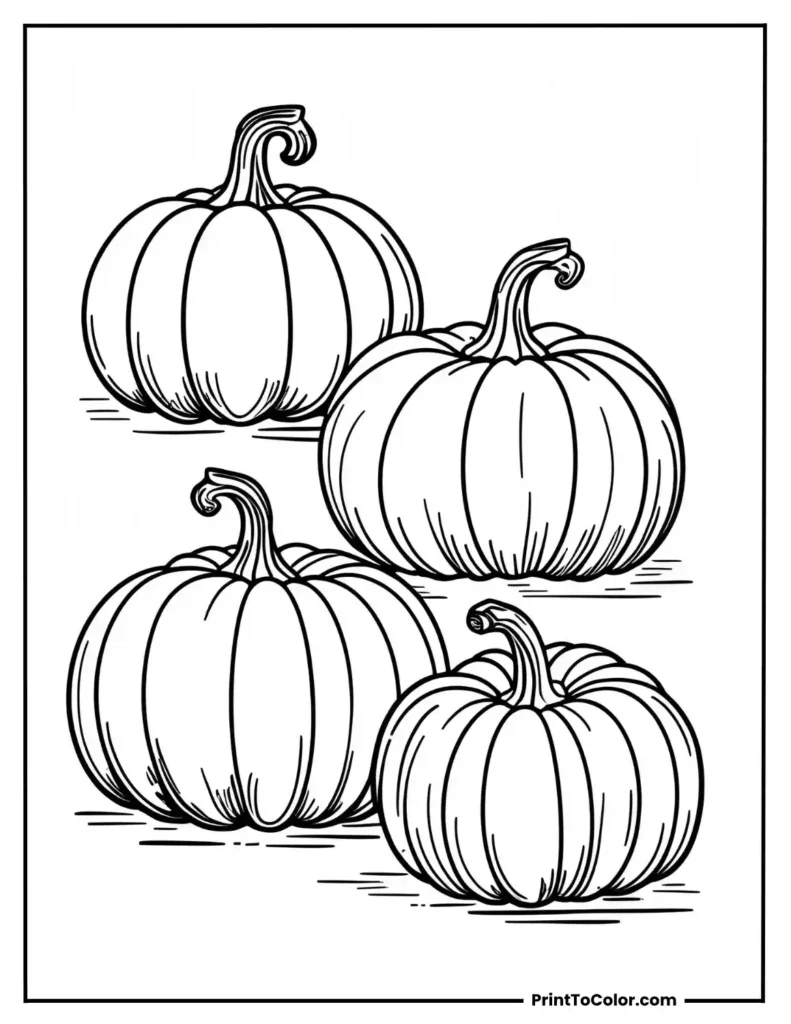
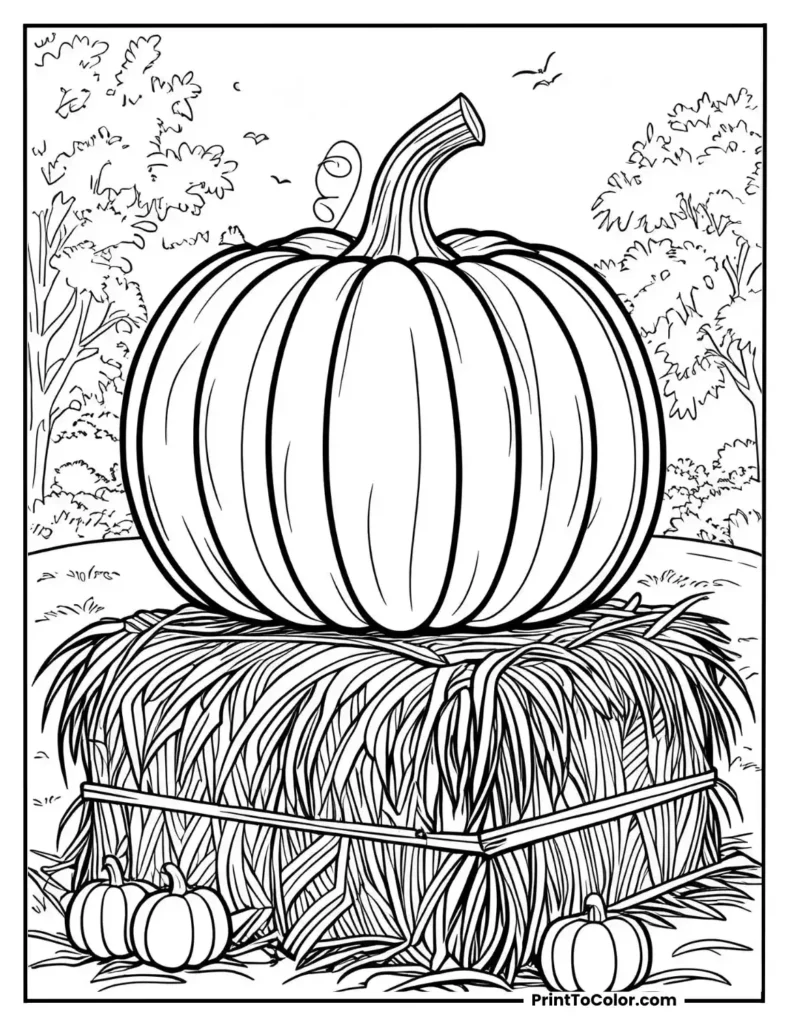
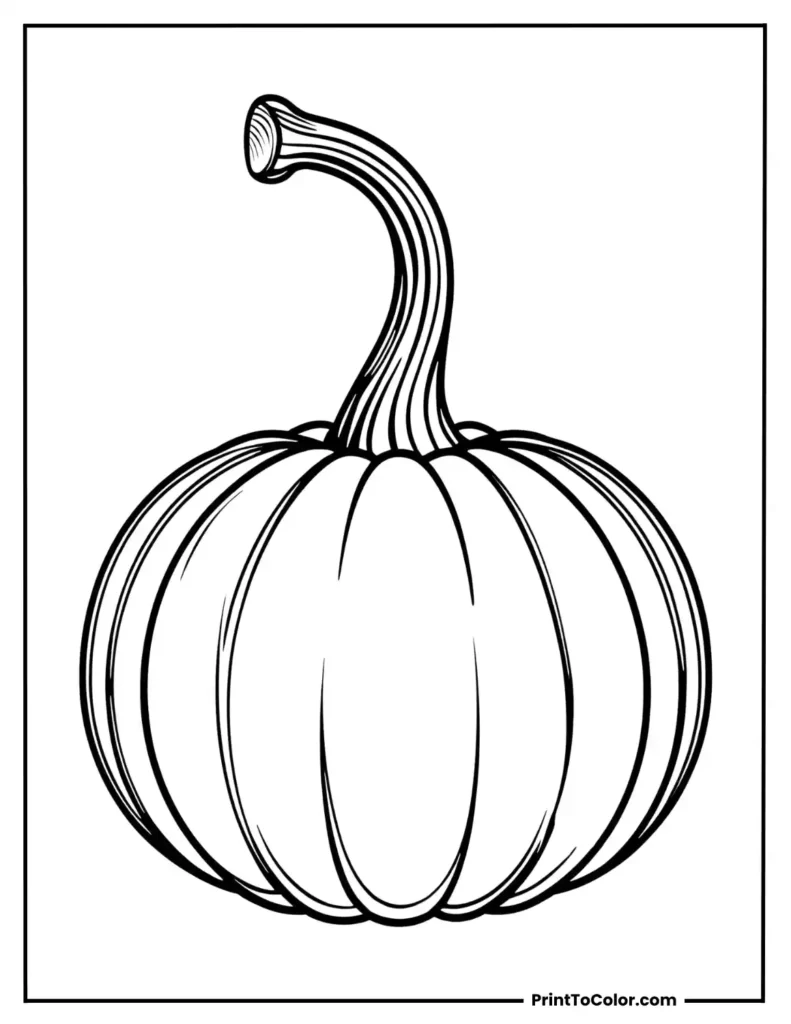
Pumpkins are the icons of autumn. From golden harvest fields to glowing jack‑o’‑lanterns on Halloween night, they capture the warmth, mystery, and celebration of the season. With our free pumpkin coloring pages, you can bring that magic to life on paper. These printables are perfect for classrooms, themed parties, or a cozy evening of mindful coloring.
What You’ll Find in These Pumpkin Coloring Sheets
Each design has been created with care so that both kids and adults can enjoy them. From simple outlines for little hands to more detailed pumpkins for older colorists, there’s something here for everyone. Explore the collection below and choose your favorites to download and print.
Pumpkins have been grown in North America for more than 7,500 years. Indigenous peoples used them for food, storage, and even decoration. Later, Irish immigrants brought the tradition of carving jack‑o’‑lanterns to America, originally using turnips before pumpkins became the favorite. Today, pumpkins symbolize harvest, abundance, and transformation — from Halloween to Thanksgiving feasts.
Pumpkins in Pop Culture
Pumpkins aren’t just crops — they’re cultural icons:
In Cinderella, a pumpkin famously transforms into a magical carriage.
In It’s the Great Pumpkin, Charlie Brown, the pumpkin patch becomes a place of hope and imagination.
In Harry Potter, pumpkin juice is a staple drink at Hogwarts.
Pumpkins are a type of squash in the gourd family.
They are native to North America and were a staple crop for Indigenous tribes.
The tradition of carving pumpkins into jack‑o’‑lanterns comes from Irish folklore about “Stingy Jack.”
Every part of the pumpkin is edible — seeds, flesh, and even flowers.
Pumpkins are grown on every continent except Antarctica.
Every year, cities around the world host pumpkin festivals and weigh-offs celebrating the largest gourds — some even turn them into boats for races!
Why Coloring Pumpkins Is So Enjoyable
Coloring pumpkins is more than a seasonal pastime. It’s a blend of creativity, tradition, and mindfulness that appeals to every age group:
Simple yet versatile: The bold, rounded outlines are easy for toddlers, while segmented ribs and curly stems give older kids and adults room to practice shading and detail.
Learning through fun: Children discover the pumpkin life cycle (seed → sprout → vine → flower → fruit), count seeds, and explore plant anatomy while strengthening fine motor skills.
Mindful relaxation: Adults find calm in the repetitive shading of pumpkin ribs, hay bales, and leaves. Studies show coloring can reduce stress and encourage mindfulness.
Seasonal charm: Pumpkins instantly connect to Halloween jack‑o’‑lanterns, Thanksgiving harvest tables, and cozy autumn décor, making them culturally familiar and emotionally comforting.
Shared tradition: Families can color together, turning it into a seasonal ritual that bridges generations.
Ideas for Coloring Pumpkins
Pumpkin coloring pages are a blank canvas for imagination. Try these ideas to make your artwork stand out:
Natural harvest tones: Blend oranges, yellows, and greens to mimic real gourds, adding brown shading for stems and vines.
Fantasy palettes: Experiment with teal, purple, or even galaxy‑themed pumpkins for a magical, storybook effect.
Seasonal scenes: Surround pumpkins with falling autumn leaves, golden sunflowers, or spooky Halloween bats.
Texture play: Shade ribs with gradients, add dotted seeds inside cut‑open pumpkins, or cross‑hatch hay bales for rustic depth.
Storybook settings: Place pumpkins in a patch with a scarecrow, turn them into glowing jack‑o’‑lanterns, or design a pumpkin house with windows and doors.
Craft extensions: Cut out finished pumpkins to create party banners, greeting cards, bookmarks, or classroom bulletin boards.
STEM twist: Label parts of the pumpkin (stem, vine, seeds, pulp) to combine art with science learning.
Creative Uses for Pumpkin Coloring Pages
Pumpkin pages aren’t just for coloring, they’re versatile tools for education, celebration, and creativity:
Classroom learning: Use them to teach math (counting seeds, measuring ribs), science (life cycle of a pumpkin), or literacy (pumpkin poems, descriptive writing).
Party fun: Perfect as Halloween activity sheets, Thanksgiving table placemats, or pumpkin‑themed party favors.
Seasonal decorations: Display finished pages on bulletin boards, fridges, windows, or classroom doors for instant autumn décor.
Mindfulness art: Adults can use intricate pumpkin mandalas or patterned gourds for stress relief and creative focus.
Storytelling prompts: Encourage kids to color a pumpkin house or jack‑o’‑lantern and then invent a story about who lives inside or what magical powers it holds.
Family traditions: Print a new pumpkin page each year and save them as a scrapbook of seasonal memories.
FAQs
Pumpkin coloring pages help children develop fine motor skills, learn about plant life cycles, and connect with seasonal traditions like Halloween and Thanksgiving.
Teachers and parents can pair coloring with lessons on pumpkin anatomy (stem, ribs, seeds, pulp, vines), counting activities, or storytelling prompts about jack‑o’‑lanterns and harvest traditions.
Traditional pumpkins are orange with green or brown stems, but gourds can also be white, yellow, or striped. Shading along the ribs creates a more lifelike effect.
The tradition comes from Irish folklore about “Stingy Jack.” Originally, turnips were carved, but when Irish immigrants arrived in America, pumpkins became the preferred choice.
Botanically, pumpkins are fruits because they contain seeds and develop from the flower of the plant. However, in cooking, they’re often treated as vegetables.