
Lily Coloring Pages
Lily coloring pages are not just pretty outlines on paper. They are a way for kids to learn about plants, for teachers to connect lessons with art, and for adults to relax with a calming activity. Lilies are among the most loved flowers in the world, and their graceful petals make them perfect for coloring.
This guide gives you everything you need: free lily coloring sheets, fun facts, educational uses, and creative project ideas.
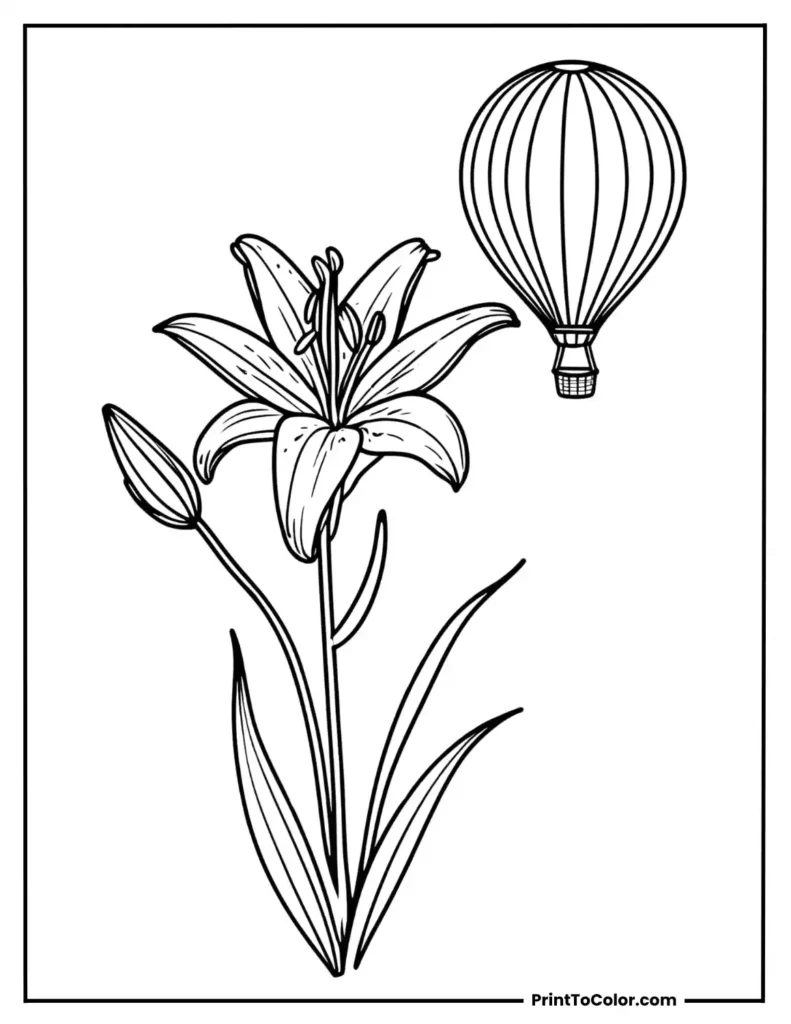
A lily with a small hot air balloon floating beside
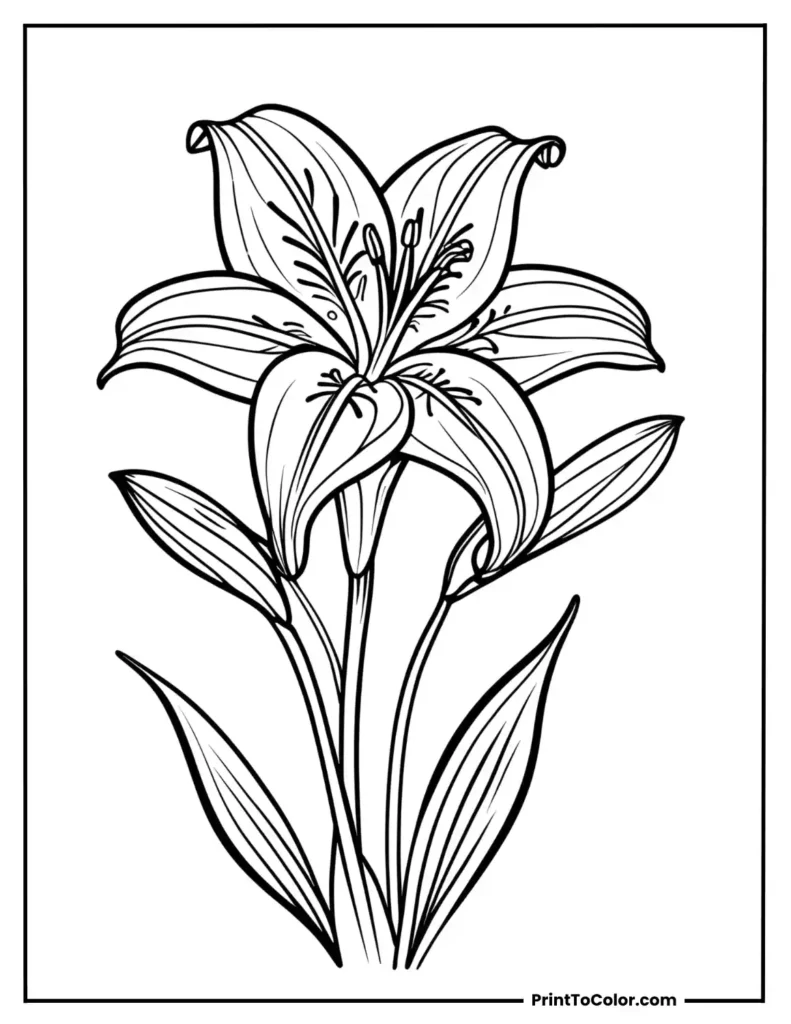
A cute lily with gentle swirl patterns on its petals
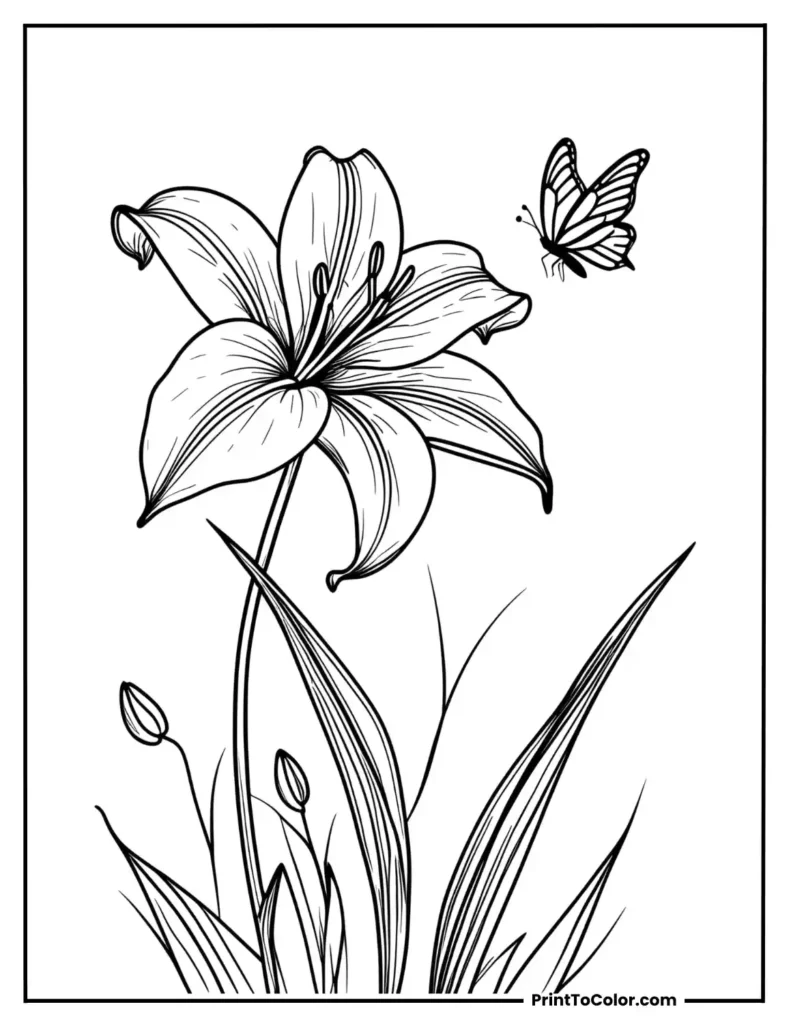
A lily with a gentle curve and a butterfly
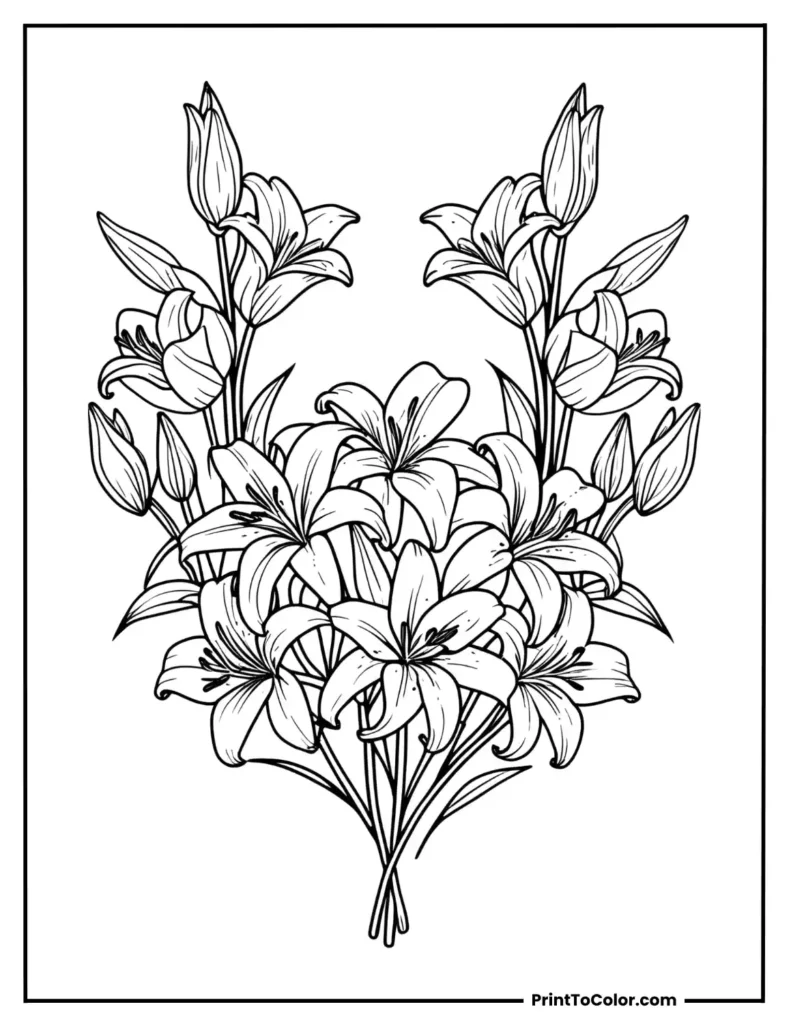
Lilies arranged in a heart shape
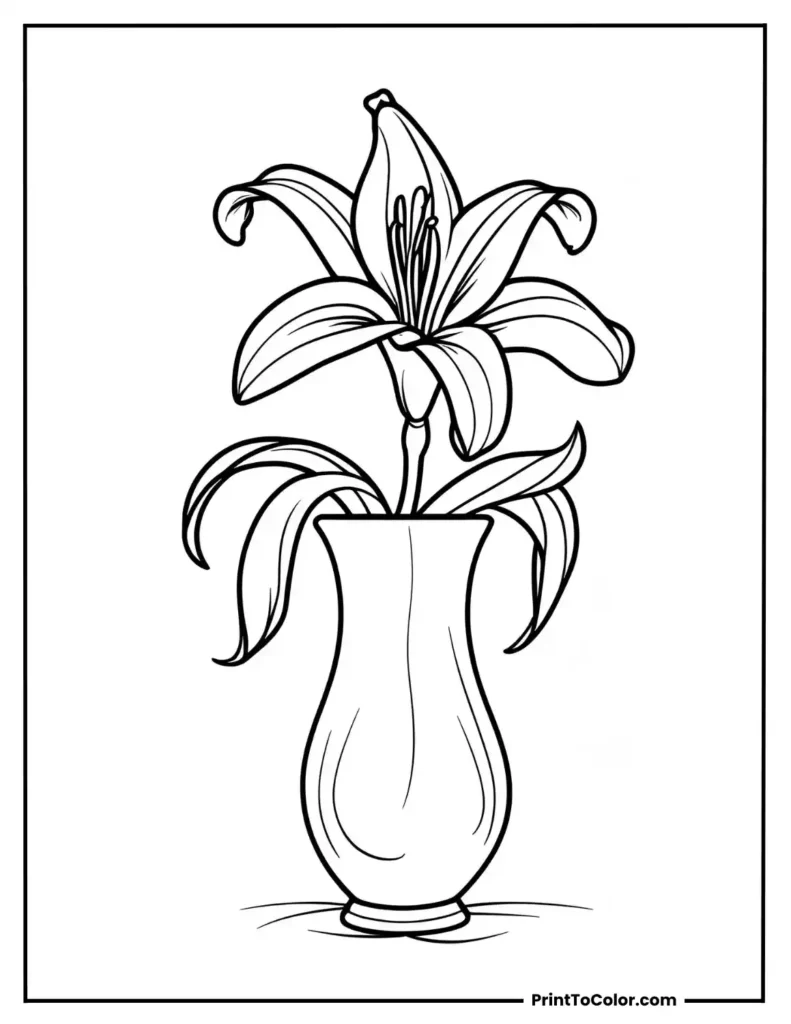
Lily in a tall vase with a curled leaf at the base
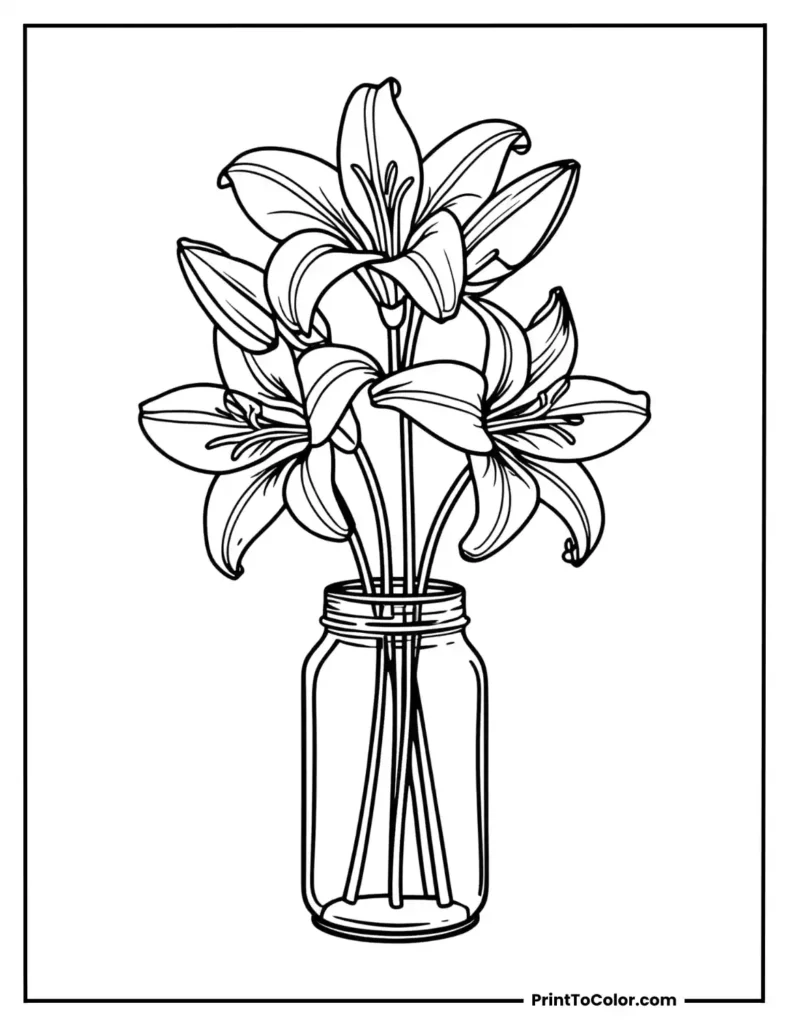
Lily stems placed in a glass jar
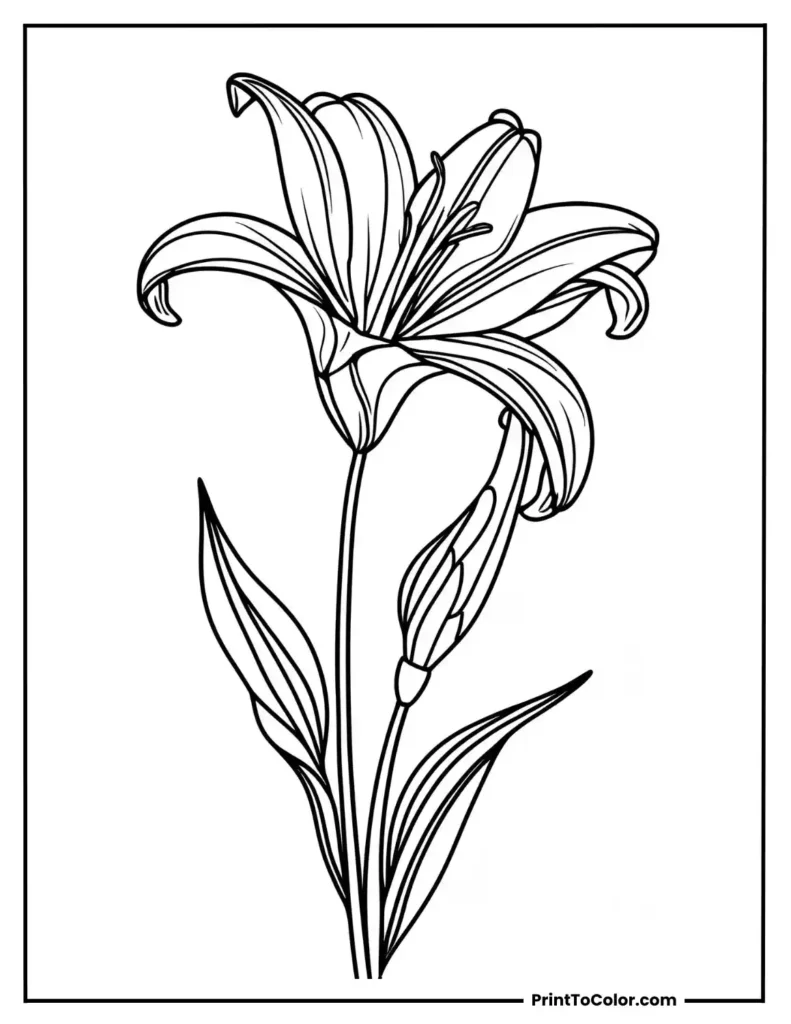
Side-view of a lily in bloom
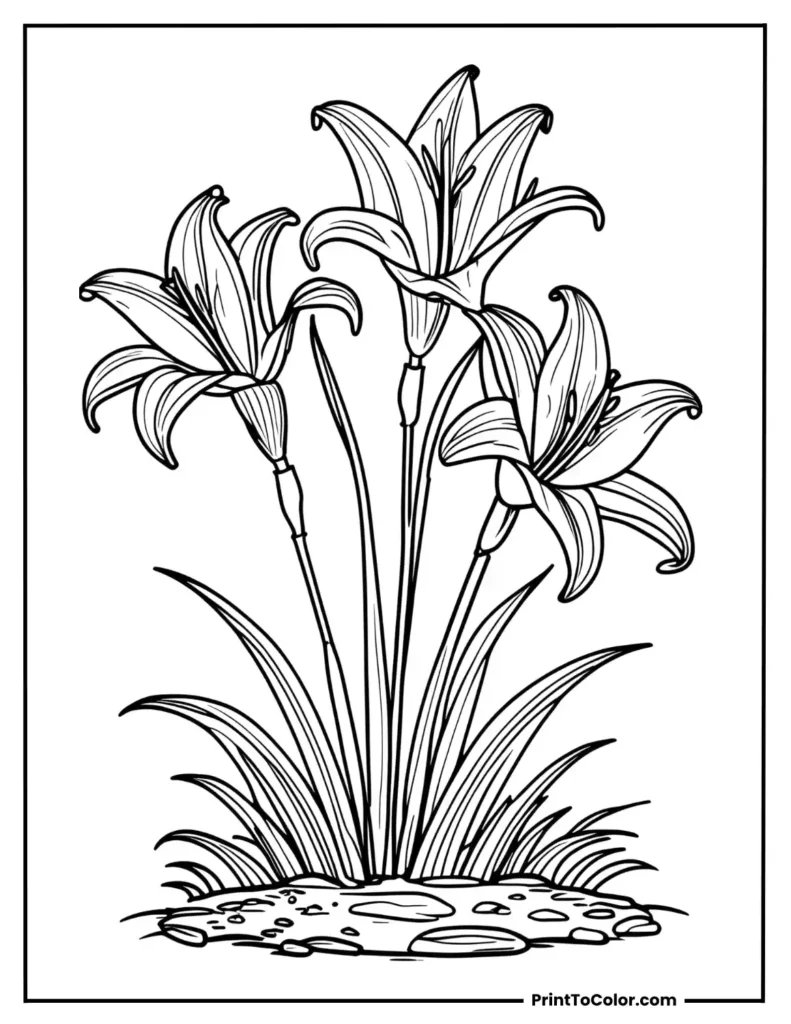
Three tall lilies growing from soil
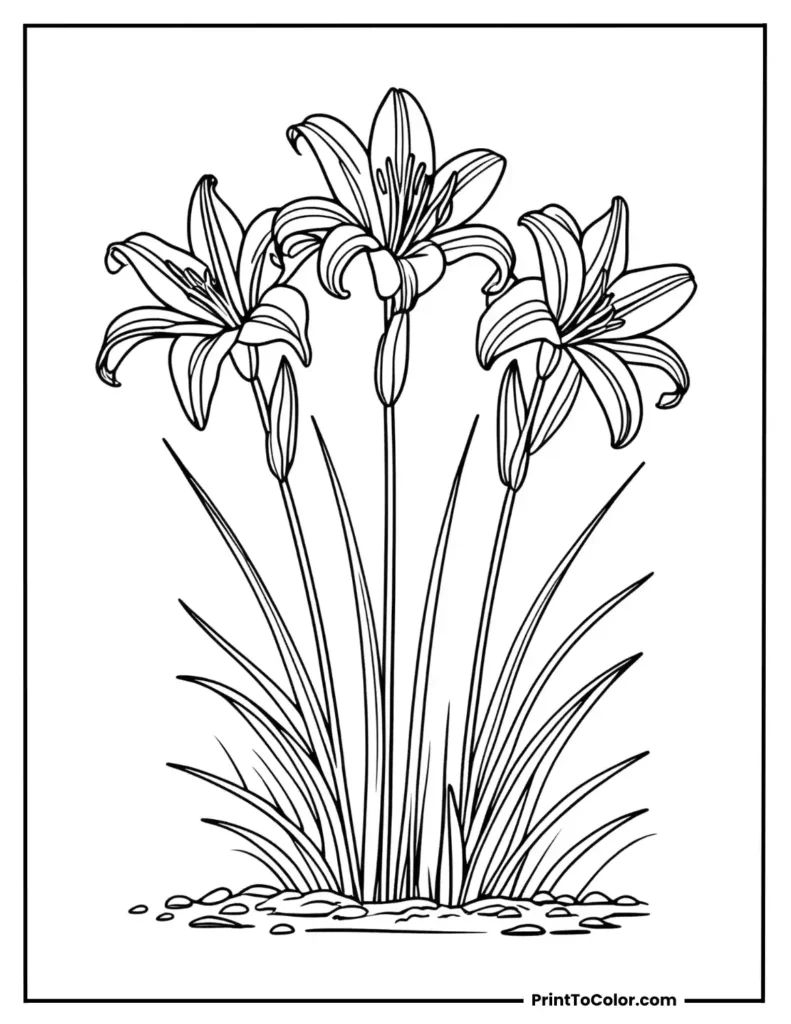
Tall lilies growing from soil
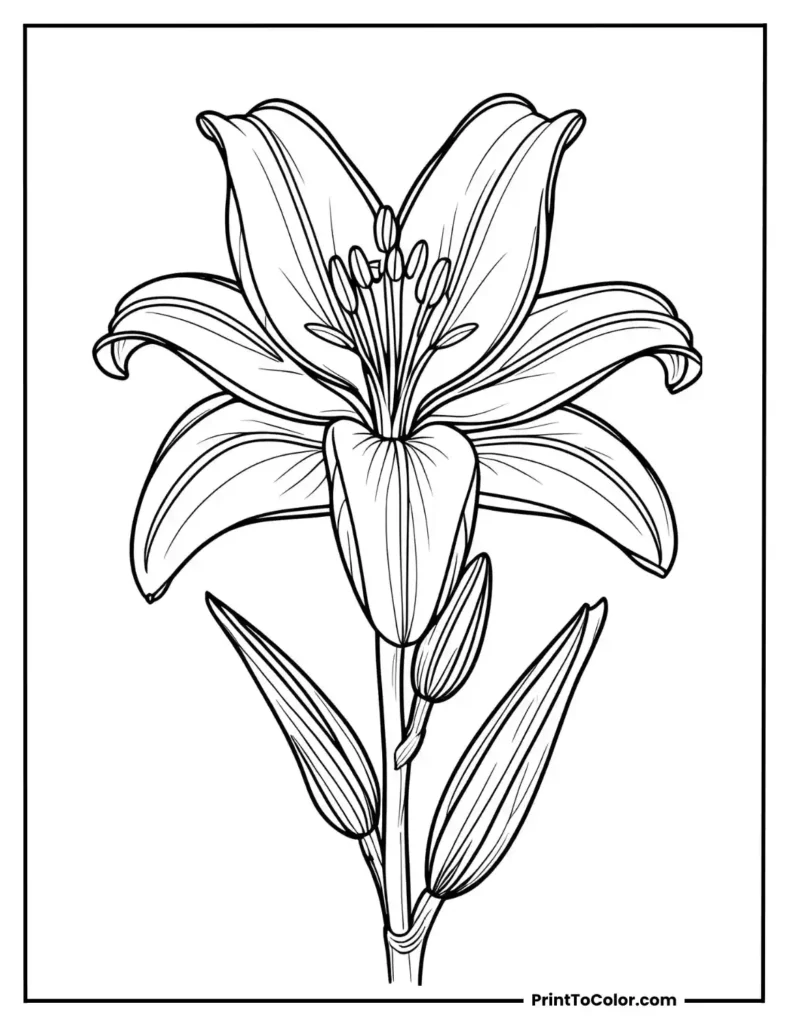
Top-down view of a fully opened lily bloom
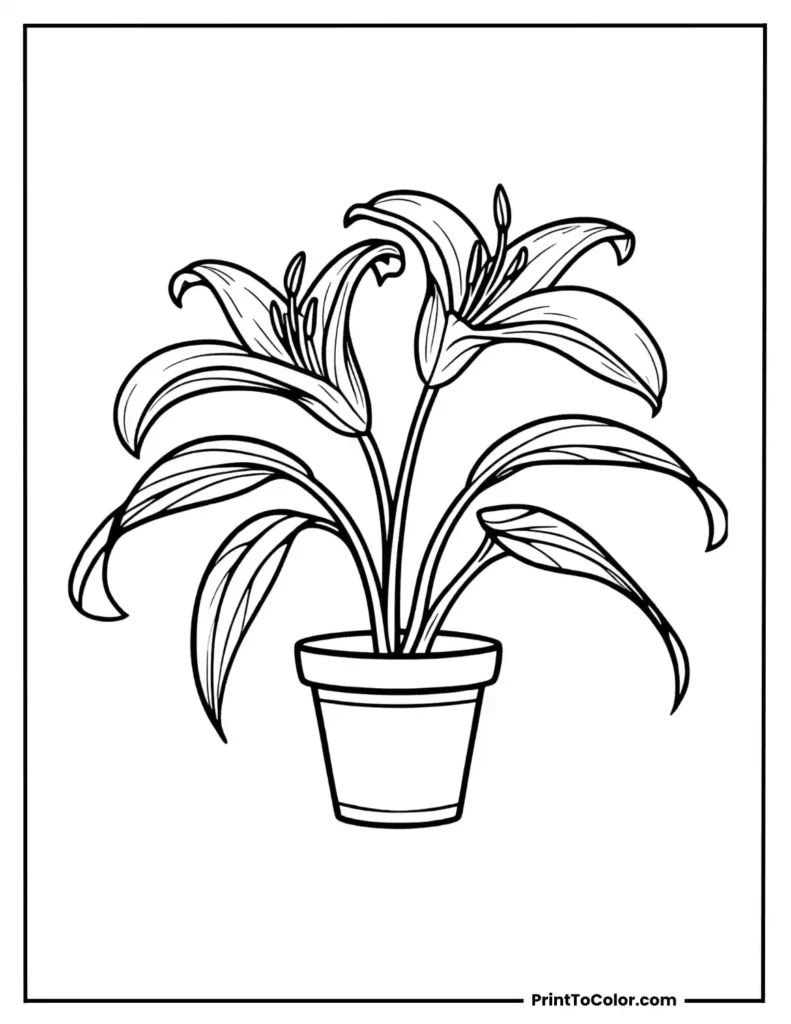
Two Lily growing in a flowerpot with curved leaves
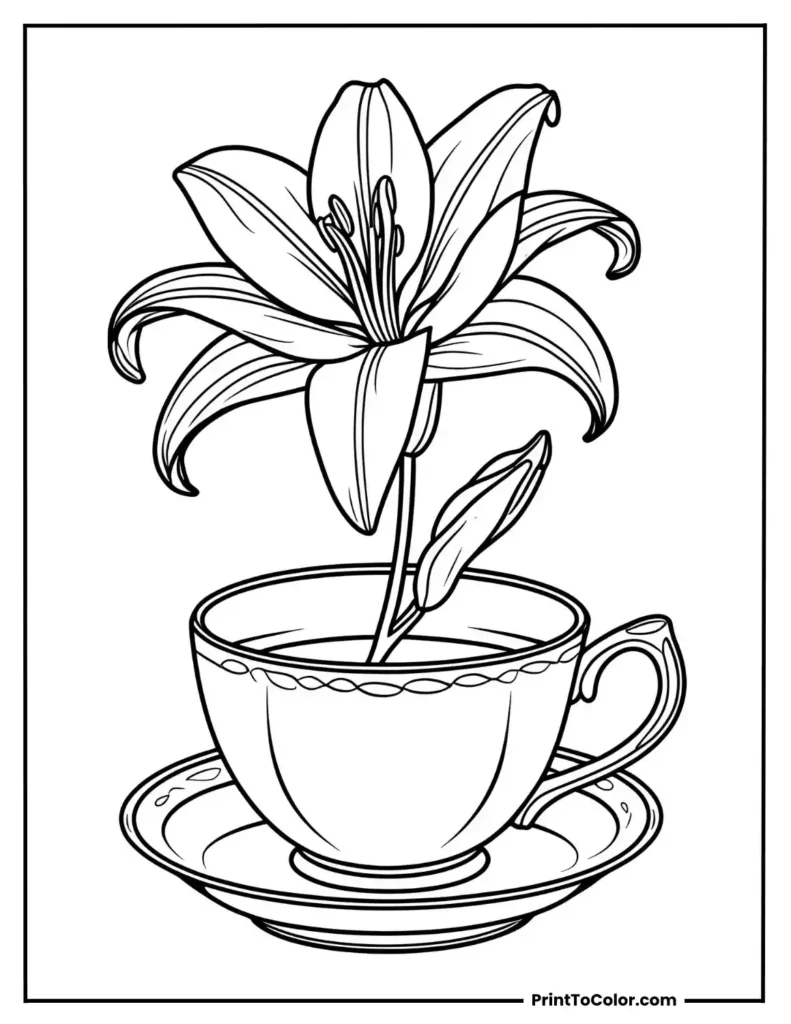
Lily (flower) in a teacup
You might also like to explore these related coloring pages
Why Lilies Are Perfect for Coloring
Lilies are tall, elegant flowers with large petals that are easy to recognize. They grow from bulbs and bloom in many colors, including white, pink, orange, and red.
Here is why they work so well for:
The Royal Horticultural Society notes that lilies are among the most popular garden bulbs worldwide (Royal Horticultural Society, 2023)
Types of Lily Coloring Pages
When you look for lily coloring sheets, you’ll find many styles. Here are the most useful categories:
Learning Benefits of Coloring Lily Pages
Coloring lilies is not just fun, it helps children learn and grow:
The American Academy of Pediatrics recommends coloring as a healthy, screen‑free activity that supports child development (AAP, 2022)
Lily Symbolism Around the World
Lilies are not just flowers — they carry meaning in many cultures:
Fun Lily Facts for Kids
Add these facts to your coloring session to make it more engaging:
Creative Ways to Use Lily Coloring Pages
Coloring pages don’t have to stop at crayons. Lily designs can be turned into projects, crafts, and activities that bring value to both kids and adults. Here are some detailed ideas:
Classroom projects
Teachers can use lily pages to brighten bulletin boards, create seasonal wall displays, or pair them with plant science lessons. For example, students can color lilies while learning about petals, stamens, and bulbs, then label each part. This makes the activity both fun and educational.
Spring crafts
Colored lilies can be cut out and turned into greeting cards, bookmarks, or handmade decorations for Mother’s Day, Easter, or spring festivals. Laminating the finished pages makes them durable keepsakes. Kids can also glue their colored lilies onto construction paper to create flower bouquets.
Mindfulness coloring
Adults and teens can use detailed lily mandalas as a calming activity. Coloring repetitive petal patterns helps reduce stress and improve focus. Pairing the activity with soft music or journaling can turn it into a simple mindfulness routine.
Family bonding
Printing multiple lily pages allows families to color together at the table. Each person can choose a different lily variety or color scheme, and the finished pages can be displayed as a “family flower wall.” This creates a sense of teamwork and shared creativity.
Art displays
Finished lily pages don’t have to stay in a drawer. They can be framed as wall art, added to scrapbooks, or used as covers for homemade notebooks. Teachers can also create a rotating “flower gallery” in the classroom where students’ work is displayed and celebrated.
Gift ideas
A colored lily page can be turned into a thoughtful handmade gift. Place it in a simple frame, use it as wrapping paper for small presents, or include it in a scrapbook for birthdays and holidays.